


 1 / 5
LEGO® Education SPIKE Essential
SKU: HH-ROB-023
excl. VAT
The SPIKE™ Essential kit from LEGO® Education, an amazing solution for teaching STEAM principles (science, technology, engineering, art, and mathematics) to elementary school students through solving everyday problems and "storytelling" (telling the story), which turns the students into thinking, independent children.
Would you like to know when the product is back?
Packaging and delivery specification
Package dimensions (L×W×H)
42×31×10 cm
Weight
1.6 kg
Dimensions and weight are estimates for delivery planning. The exact specification is the one in the document you receive — a price quote or an invoice.
Full description
The SPIKE™ Essential kit from LEGO® Education
An amazing solution for teaching STEAM principles (science, technology, engineering, art, and mathematics) to elementary school students through solving everyday problems and "storytelling" (telling the story), which turns the students into thinking, independent children.
Who is it suitable for?
Elementary school students
Subjects of study
- Programming and computational thinking: creating and changing sequences, testing, debugging, and using loops
- The engineering design process: defining a problem, brainstorming possible solutions, and testing and improving a prototype
- Mathematics
- Energy, energy transfer, collisions
Skills
Using the kit develops the following skills in children:
- Problem solving
- "Storytelling" (how to tell a story)
- Social-emotional skills
- Verbal communication
- Literacy
- Teamwork
What does the kit include?
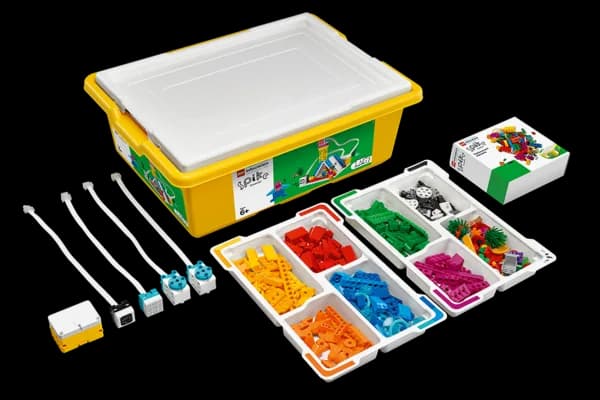
The basic kit is intended for 2 students working together and includes the following parts:
- 449 LEGO bricks
- 4 characters, each with its own special personality
- Color-coded storage trays
- The kit is accompanied by a dedicated and intuitive app
The SPIKE™ Essential kit in action
Teacher support
The kit comes with support materials and lesson plans to help teachers operate it:
- Comprehensive lesson plans for 50 hours of learning
- Introductory materials
- Support for classroom implementation
- Assessment tools
- Hybrid learning resources
- Tools for independent professional development
The learning units
Each unit includes 7-8 lessons of 45 minutes each
The units
Big Adventures
- Creating interactive stories.
- Introduction to computational thinking: the students explore sequences and loops, understand cause and effect, and test and fix bugs – all while working on their collaborative conversation skills.
Amazing Amusement Park
- Engineering a fun day at an amusement park.
- Introduction to engineering design skills: the students define problems, brainstorm possible solutions, and test prototypes – all while working on their observation, storytelling, and conversation skills.
The Merry Traveler
- Programming a city tour.
- This unit develops the students' understanding of computer science as they create sequences and loops, learn to break problems down into small parts, and improve and debug code, while working on their communication skills.
Crazy Carnival Games
- Playing with energy transfer and collisions.
- This unit develops the students' engineering design skills as they define problems, brainstorm possible solutions, and test and refine prototypes, all while sharpening their problem-solving and collaboration skills.
Wacky Creations
- Creative and learning.
- This unit develops the students' engineering design skills as they define problems, brainstorm possible solutions, and test and refine prototypes, all while sharpening their problem-solving and collaboration skills.
Frequently asked questions
The kit is intended for elementary school students and helps in teaching STEAM principles through problem solving and storytelling.
The kit includes 449 LEGO bricks, 4 unique characters, color-coded storage trays, and the accompaniment of a dedicated, intuitive app.
The basic kit is intended for joint work by two students.
Teachers benefit from comprehensive lesson plans, introductory materials, classroom implementation support, assessment tools, hybrid learning resources, and independent professional development tools.
The program includes programming and computational thinking, the engineering design process, mathematics, and also topics such as energy, energy transfer, and collisions.