



Smart homes and architecture workshop – designing, building, and programming a smart home
SKU: HH-EVT-008
excl. VAT
A hands-on 90-minute workshop in smart home design and architecture: plan a house like architects, build a model, and program a smart controller with sensors and motors — lighting, a door, a fan, and an alarm.
How it works
No delivery — arranged directly with you
There is no physical delivery and no delivery charge. After the order we will contact you to arrange the date.
Full description
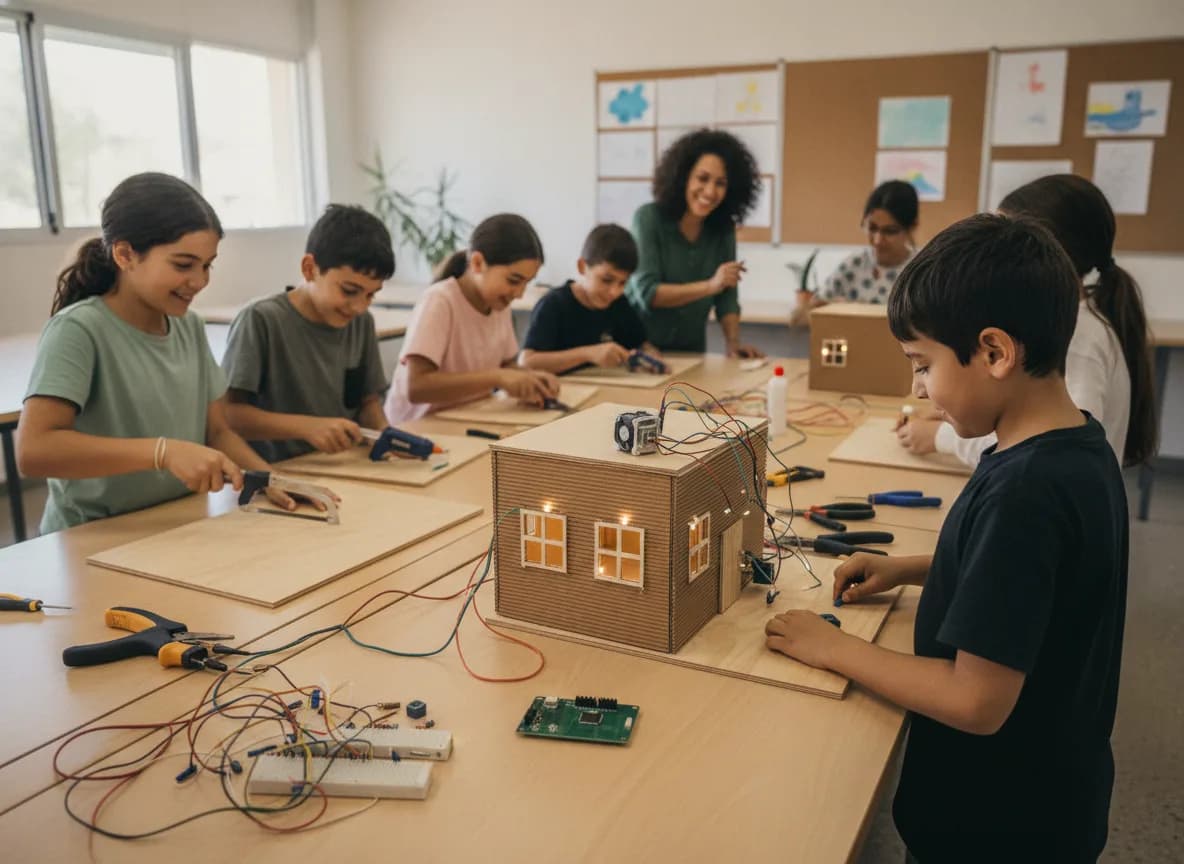
A hands-on 90-minute workshop in which participants meet the world of the smart home and architecture: they plan a structure like architects, build a model of a house, and program it to respond to its surroundings.
## How it works
Each group receives a kit and a smart controller, connected to several motors and sensors. First they learn to build and then to program — from simple actions to complex ones that combine several sensors together — and at the end each group designs its own house with a personal design.
## What we talk about
- What makes a house "smart": sensors, controllers, and communication
- Architectural planning: dividing spaces, lighting, and ventilation
- Green building and renewable energy
- The Internet of Things (IoT) and control from the phone
## Possible outputs
- Lighting that turns on by itself when it gets dark
- A door or gate that opens at the press of a button or by a sensor
- A fan that runs according to the temperature
- An alarm that responds to motion
- A house model in the group's personal design
What the institution provides: a large, closed room and power outlets for charging. Recommended duration: 90 minutes (45 is also possible). Suitable for grades 5–9, with face-to-face instruction at the institution or on Zoom.
Frequently asked questions
The workshop is suited for students in grades 5 to 9, and is delivered through face-to-face instruction at the institution or over Zoom.
The recommended duration for the workshop is 90 minutes, but it can also be held for 45 minutes.
Each group gets a kit and a smart controller connected to motors and sensors. Participants learn to build the house model, program it for different actions, and finally design it with a personal design.
Students build a house model with a personal design and operate systems in it such as a light that turns on by itself, a door or gate that opens, a fan according to temperature, and an alarm that responds to motion.
The institution needs to provide a large, closed room and power outlets for charging.